
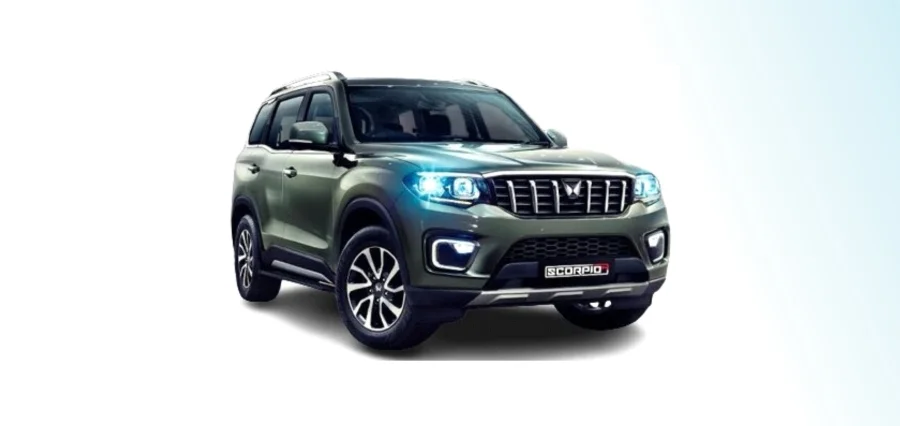
The automotive industry has increasingly moved toward crossovers and urban-oriented SUVs, many of which prioritise comfort, styling, and fuel efficiency over mechanical ruggedness. Yet certain vehicles continue to represent a more traditional interpretation of the SUV — one built around structural strength, durability, and capability. The Mahindra Scorpio N exemplifies this philosophy. Even as modern technology and comfort features evolve, the vehicle retains core attributes that define traditional sport utility vehicles.
This persistence of classic SUV DNA explains why vehicles like the Scorpio N remain highly relevant in today’s market.
The Foundation: Body-on-Frame Construction
At the heart of traditional SUVs lies the ladder-frame or body-on-frame architecture. Unlike monocoque construction commonly used in crossovers, body-on-frame designs separate the vehicle body from the chassis, allowing the frame to absorb higher mechanical stress.
The Mahindra Scorpio N uses a next-generation body-on-frame platform engineered for increased torsional rigidity and durability. This structural design enhances its ability to withstand challenging terrain, heavy loads, and long-distance driving conditions.
Such architecture is often associated with vehicles designed for durability rather than purely urban convenience. For many SUV enthusiasts, this mechanical configuration remains a defining characteristic of authenticity.
Dimensions That Reinforce Presence
Traditional SUVs are often recognised by their upright proportions and commanding road presence. The Scorpio N’s dimensions reflect this heritage, measuring 4662 mm in length, 1917 mm in width, and 1857 mm in height, with a 2750 mm wheelbase.
These proportions create a broad stance that contributes to both visual impact and interior space. The elevated seating position provides improved road visibility, which many drivers associate with greater confidence and control in heavy traffic.
Such physical attributes distinguish vehicles like the Scorpio N from smaller crossover-style SUVs that emphasise compactness.
Powertrain Strength and Torque Delivery
Another hallmark of traditional SUVs is strong torque output, particularly from diesel engines. Torque is essential for carrying passengers, towing loads, and navigating steep gradients or rough terrain.
The Scorpio N offers a 2.2-litre mHawk diesel engine producing up to 128.6 kW and 400 Nm of torque, alongside a 2.0-litre mStallion petrol engine delivering up to 149.14 kW and 380 Nm.
These power figures highlight the vehicle’s ability to perform under demanding conditions. Torque-focused engines remain a defining feature of traditional SUVs, delivering strong low-speed pulling power and stable highway performance.
Off-Road Capability and Terrain Adaptability
True SUVs are expected to perform across multiple terrain types. The Scorpio N features the 4XPLOR intelligent four-wheel-drive system with selectable terrain modes including Normal, Snow, Mud & Ruts, and Sand.
This system optimises traction and drivetrain response according to road conditions. Additional features, such as an electronic brake locking differential, enhance grip in challenging environments.
While many modern SUVs are rarely taken off-road, maintaining such capability reinforces the Scorpio N’s traditional identity.
Suspension Designed for Tough Conditions
Suspension engineering also contributes to SUV DNA. The Scorpio N features Penta Link suspension with WATT’s linkage, along with Frequency Dependent Damping (FDD).
This combination balances durability with ride comfort. It allows the vehicle to absorb uneven road surfaces while maintaining stability at higher speeds.
In earlier SUVs, rugged suspension often resulted in a stiff ride. Modern engineering seeks to retain durability while improving refinement, illustrating how traditional DNA can coexist with evolving comfort standards.
Modern Technology Without Losing Identity
Although rooted in traditional SUV principles, the Scorpio N integrates contemporary technology. The vehicle includes the Adrenox connected car platform with over 70 connected features.
It also offers a 20.32 cm infotainment display, 17.78 cm digital instrument cluster, and a 12-speaker Sony 3D immersive audio system.
Safety technology has similarly advanced. The Scorpio N incorporates Level 2 ADAS features, including Adaptive Cruise Control, Forward Collision Warning, and Lane Keep Assist.
These additions demonstrate that traditional SUV strength can be enhanced through digital innovation rather than replaced by it.
The Role of Research in Modern SUV Buying
Today’s buyers often evaluate vehicles extensively before visiting showrooms. Online car-buying platforms such as ACKO Drive allow prospective owners to review specifications, drivetrain configurations, and safety technologies before finalising their choices.
Such research helps buyers understand how vehicles like the Scorpio N combine rugged engineering with modern convenience features.
Digital comparison tools, therefore, play an increasingly important role in shaping SUV purchasing decisions.
Conclusion
The Mahindra Scorpio N highlights how traditional SUV DNA persists in a rapidly evolving automotive landscape. Its body-on-frame construction, torque-focused powertrains, terrain-capable four-wheel-drive system, and durable suspension design reflect the engineering principles that defined early sport utility vehicles.
At the same time, modern infotainment systems, connected technology, and advanced driver assistance features ensure that these traditional attributes remain relevant for contemporary buyers.
In an era where many SUVs have moved toward softer crossover identities, the Scorpio N demonstrates that rugged mechanical heritage still holds strong appeal.